B2B
Nexus Hospitality Hubs
Collaborative Robotics
Friction, Robotics, and the 2026 Labor Gap: Solving the Industry’s Structural Deficit
B2B
Nexus Hospitality Hubs
Collaborative Robotics
As we navigate the first quarter of 2026, the hospitality sector has been forced to accept a sobering reality: the labor model that sustained the industry for decades is officially broken. What was once described as a "temporary shortage" has evolved into a permanent structural deficit. With an estimated 18% labor shortfall projected for the year, the most physically demanding roles—housekeeping, maintenance, and BOH logistics—are seeing turnover rates that make traditional recruitment strategies obsolete.
The industry is no longer in a "hiring phase." We have entered the Augmentation Era, where the goal is not to replace the human element, but to eliminate the friction that causes it to burn out.
The "Uncanny Valley" vs. Pure Utility
One of the most significant debates currently gripping hospitality leadership is the design philosophy of service robotics. As autonomous units become standard in corridors from Dubai to Las Vegas, operators are hitting the "Uncanny Valley"—the point where a robot’s attempt to mimic human empathy becomes "cringe-inducing" for guests rather than welcoming.
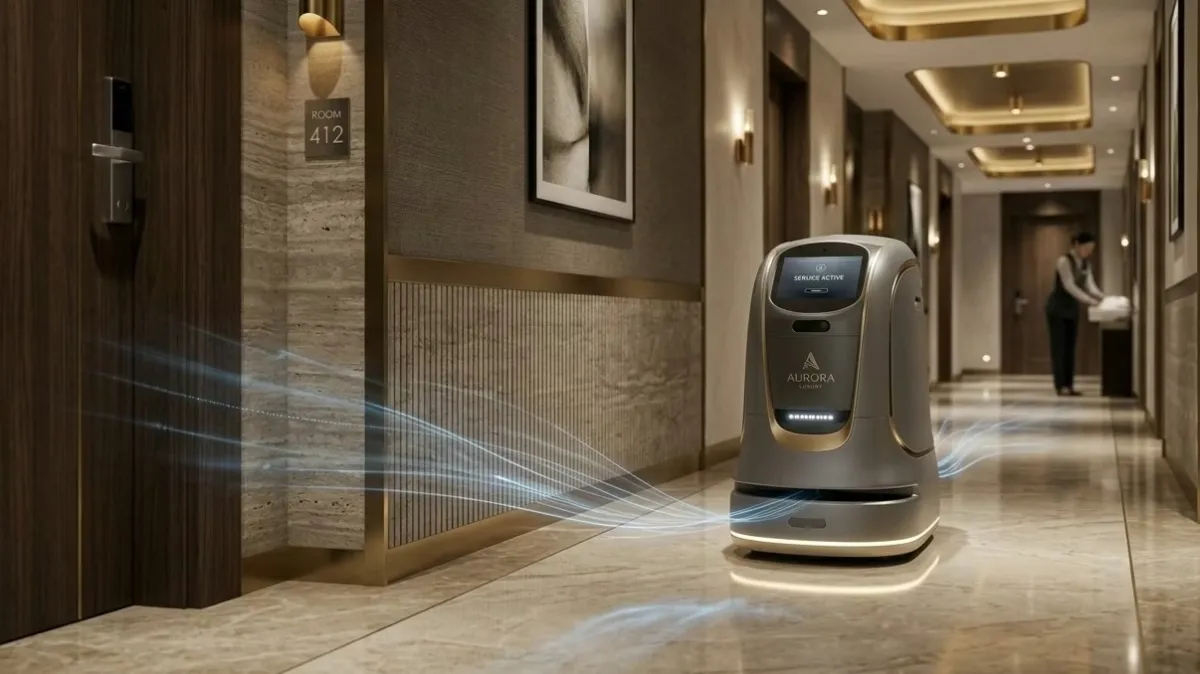
For 5-star environments, the consensus is shifting toward Invisible Hospitality. Guests at the luxury level do not want a robot with a digital face trying to simulate a greeting; they want a high-performance tool that facilitates a seamless stay. The value of robotics in 2026 lies in "Cobotics" (Collaborative Robotics):
• Logistics: Autonomous multi-bin systems (like the Relay2) handling the "2 a.m. toothbrush run" so the night audit stays at their post.
• Sanitation: Heavy-duty LiDAR-equipped vacuums (like the LG CLOi) that "learn" the concept of clean, identifying specific stains on carpets without human programming.
• Back-of-House: Robotic laundry and linen transport that removes the physical strain of "back-breaking" 3D tasks (Dirty, Dull, Dangerous).
The Adoption Paradox: Why Mobile Check-in Still Stalls
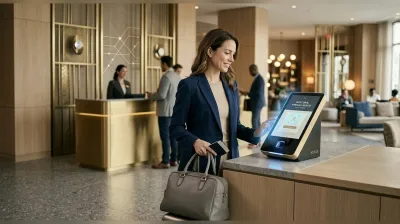
Despite the availability of technology, the industry continues to struggle with mobile check-in adoption. While we’ve optimized the guest-facing UI, the friction remains in the "Last Mile." Adoption isn't failing because guests don't want it; it's failing because of System Fragmentation. If a mobile check-in doesn't instantly talk to the digital door lock, or if the PMS requires a staff member to "verify" the digital check-in manually, the friction is simply shifted rather than removed. To bridge this gap, 2026 leaders are moving toward Agentic Systems—AI that doesn't just notify a staff member but actually executes the transaction directly within the PMS logic.
The Silent Productivity Killer: B2B Invoicing
While robots and AI agents dominate the headlines, the most significant drain on hotel ROI right now is happening in the finance office. Manual B2B invoicing has become the "silent killer" of productivity. In an era where we can price rooms 1,000 times a day based on airline load factors, many finance teams are still trapped in a 2020 workflow of manual reconciliation and paper-based chasing.
True operational excellence in 2026 requires a "Digital Gold Thread" that connects procurement, inventory, and revenue management into a single, fluid stream.
The Pulse Connection: Signal from the Hubs
This piece was shaped by the high-intensity debates happening across the Nexus Hospitality Hubs this week. To solve the 2026 Labor Gap, professionals must look at the property as a unified nervous system:
• Hub 4 (Smart Ops) & Hub 6 (Connectivity): We’ve been debating the balance between "Faces" on robots and the reality of B2B invoicing friction. The takeaway? Utility beats gimmickry every time.
• Hub 1 (Core Engine) & Hub 3 (Guest Journey): The "Legacy Tax" of closed PMS systems is what prevents the seamless mobile adoption we all strive for. Transitioning to an Open API (like Mews or Hapi) is no longer a tech choice; it’s a survival requirement.
• Hub 2 (Revenue) & Hub 5 (Trust): As we automate, we are using "Signal-Based Pricing" to capture demand while utilizing "Digital Shields" (like Logit) to ensure our lean teams stay audit-ready for new 2026 safety mandates.
The labor gap is only a crisis if you try to fill it with 20th-century tools. If you eliminate the friction, the gap disappears.