Aviation
Hospitality
Post-ITB 2026: From "Booking Rooms" to "Buying Time"
Aviation
Hospitality
As the 60th-anniversary edition of ITB Berlin wraps up, the consensus among trade attendees is clear: the industry has moved past the recovery phase and firmly into the "Efficiency Era." While early industry enthusiasm projected crowds reminiscent of 2019's 160,000+ peaks, official Messe Berlin data confirms that a highly targeted group of nearly 97,000 global professionals gathered for this milestone event.
The dominant headline across the halls wasn't about capacity—it was about Digital Sovereignty. With 2026 international arrivals on track to break all records, the bottleneck is no longer demand; it’s the processing power of our borders and front desks.
The Single-Token Reality
The conversation across the Travel Technology sector highlighted a critical operational pivot: we are no longer just managing travelers; we are managing their data flow.
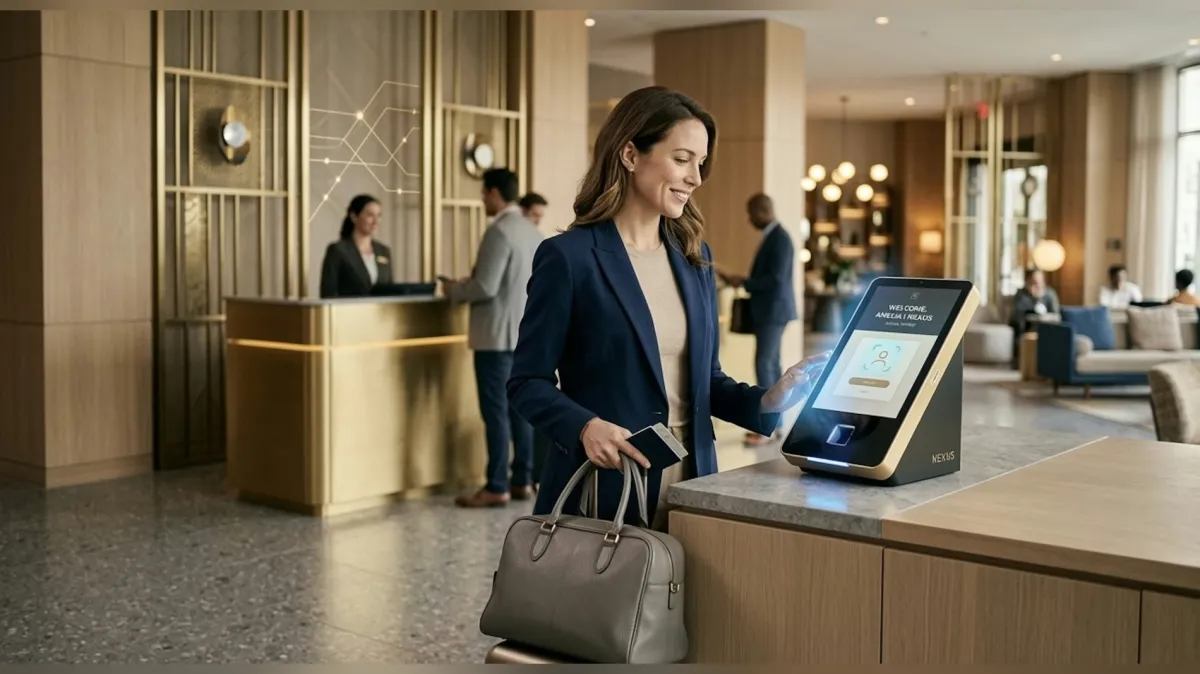
According to 2026 aviation and hospitality roadmaps, the industry is rapidly transitioning from standalone biometric pilot programs to the "single-token journey." In this model, a traveler's biometric template—such as a facial or iris scan—is securely linked to their verified travel documents in the cloud. This single token becomes their passport, their boarding pass, and their hotel room key.
The EUDI Wallet Rollout
This operational shift is only possible now because the underlying digital infrastructure has matured. 2026 marks the year digital identity wallets begin scaling under formal, enforceable trust frameworks.
In Europe, the European Digital Identity (EUDI) regulation and eIDAS frameworks are driving the adoption of accredited digital wallets, which Member States are expected to offer by the end of the year. This gives travelers true "Digital Sovereignty," allowing them to securely store, control, and share verified credentials instantaneously without physical document scanning or repetitive manual data entry at the reception desk.
The "Experience Economy" is maturing. Guests are now willing to trade verified data for time. If your check-in process takes longer than a FaceID unlock, you are creating friction for a traveler who expects absolute seamlessness. The competitive advantage in 2026 no longer lies solely in the physical amenities of the room, but in the frictionless architecture of the arrival.